The Paper Cup Manufacturing Process: A Detailed Guide

paper-cup-making-process

Table of Contents

Introduction
1. Raw Material Preparation
2. Adding Moisture to the Blanks
3. Machine Setup and Preheating
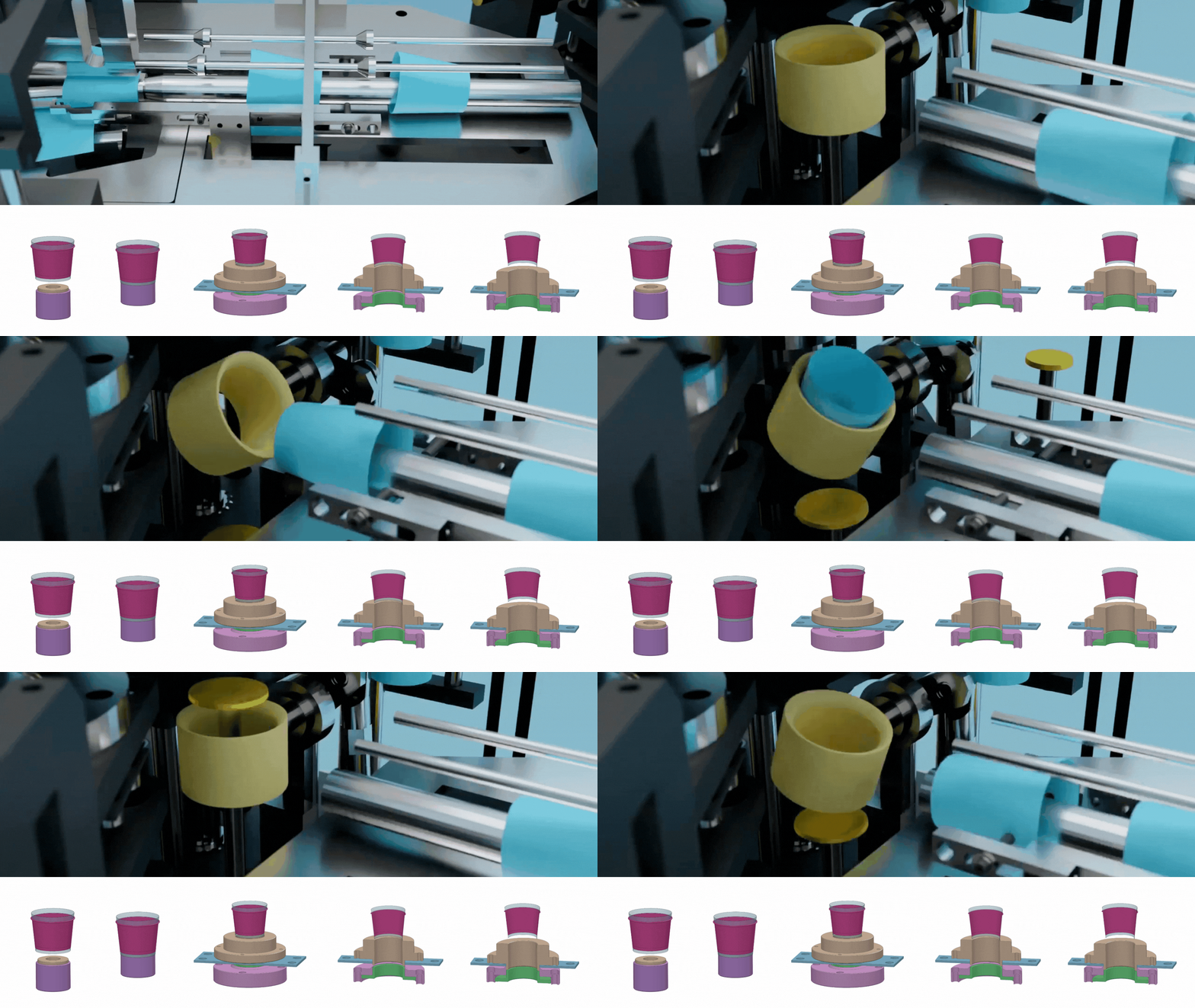
4. Sidewall Formation
5. Bottom Formation and Insertion
6. Bottom Preheating and Sealing
7. Top Curling
8. Finished Cup Collection
Key Features of the Paper Cup Making Process
Advanced Features in Modern Paper Cup Machines
Conclusion

Share

Introduction

Paper cup production involves precision, efficient machinery, and the right techniques to achieve a high-quality product. This guide walks you through the paper cup making process, covering each stage from raw material preparation to the final collection of cups, ensuring seamless operations and consistent results.

1. Raw Material Preparation

The process begins with preparing the primary raw material: coated paper. This paper can be:

  • Printed or Non-Printed: Depending on customer requirements.
  • Coated: With PE (Polyethylene) or PLA (Polylactic Acid) to make the cups waterproof and suitable for hot or cold beverages.

Key Consideration: Paper cup machines can seal paper with various coatings using advanced technologies like ultrasonic sealing for eco-friendly materials or heat sealing for traditional PE-coated paper.

2. Adding Moisture to the Blanks

The pre-cut paper blanks (fans) are placed on the blank stand of the machine. To facilitate smooth curling during later stages:

  • Moisture Addition: A water sprinkler adds moisture to the top portion of the blank, softening the edges for seamless curling.

3. Machine Setup and Preheating

Before starting the production, the machine is prepared:
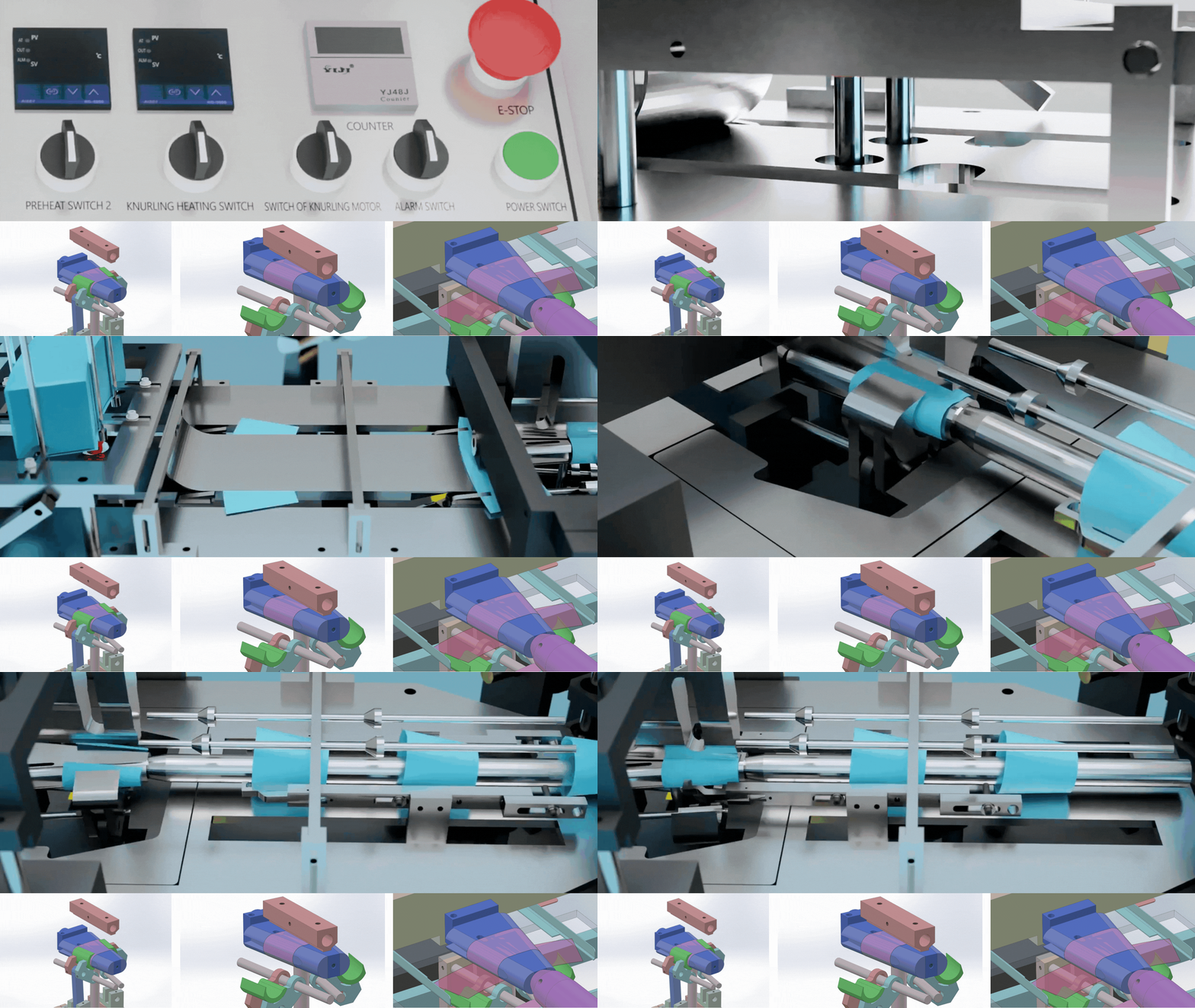
  • Setpoints Configuration: Heater Temperature and Speed Settings are calibrated to match production requirements.
  • Preheating: Once the desired setpoints are reached, the machine is ready to run.
paper cup making process

4. Sidewall Formation

1. Suction Station:

  • Setpoints Configuration: Heater Temperature and Speed Settings are calibrated to match production requirements.
  • Preheating: Once the desired setpoints are reached, the machine is ready to run.
paper cup making process

5. Bottom Formation and Insertion

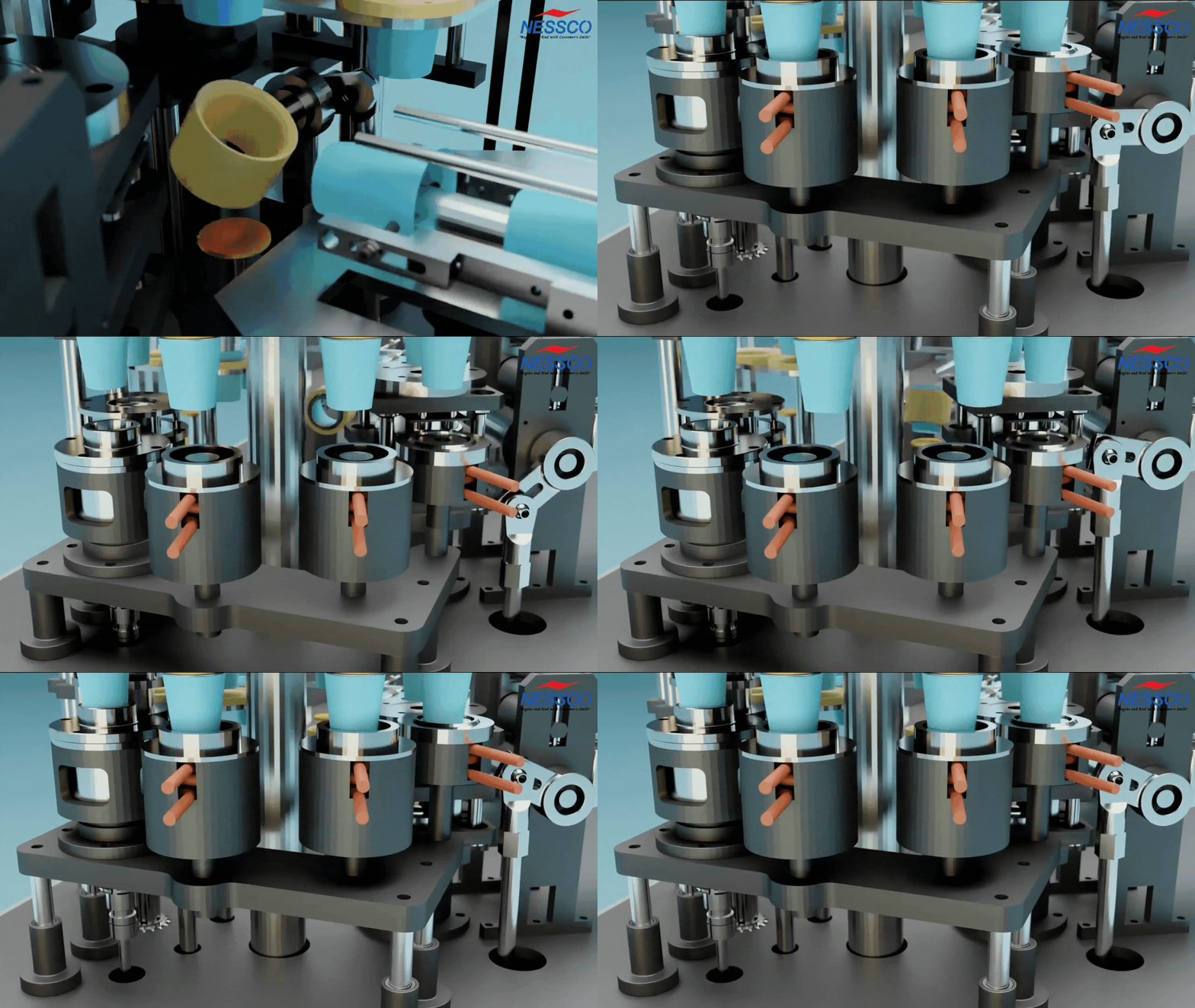
The bottom reel is fed into the machine, pre-cut to the required diameter, and inserted into the cone at the cutter station.
paper cup making process

6. Bottom Preheating and Sealing

The bottom is preheated using conventional or hot blower heating and folded inward at the cone's base to create a seal.
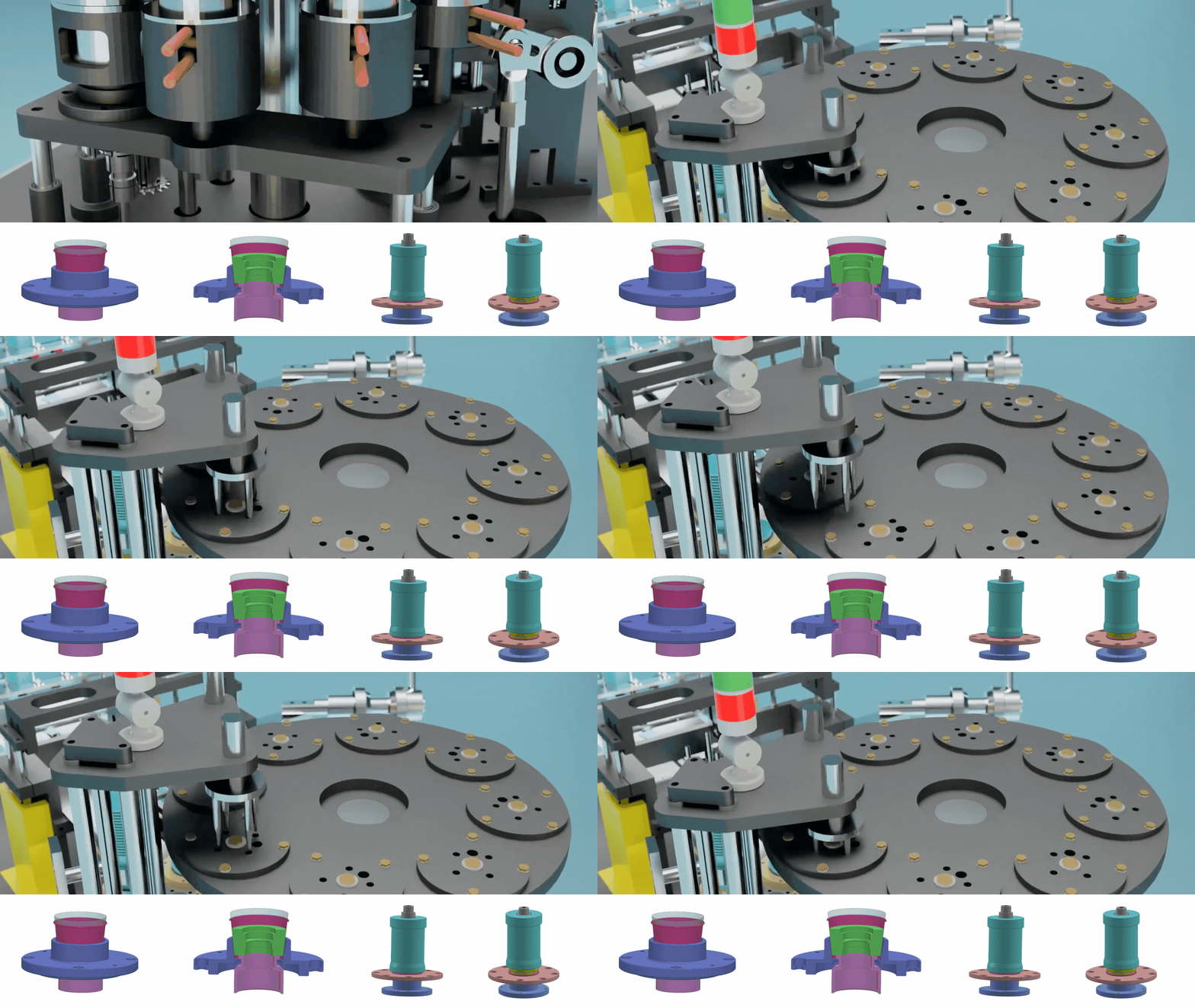
  • Knurling: A tool ensures a leak-proof joint by welding the bottom disc to the cone.
  • Outcome: This results in a strong, leak-free seal between the cone and the bottom of the cup.
paper cup making process

7. Top Curling

The upper rim of the cup is pre-heated and curled to soften the edges, creating a spiral-shaped helix for enhanced strength and usability.
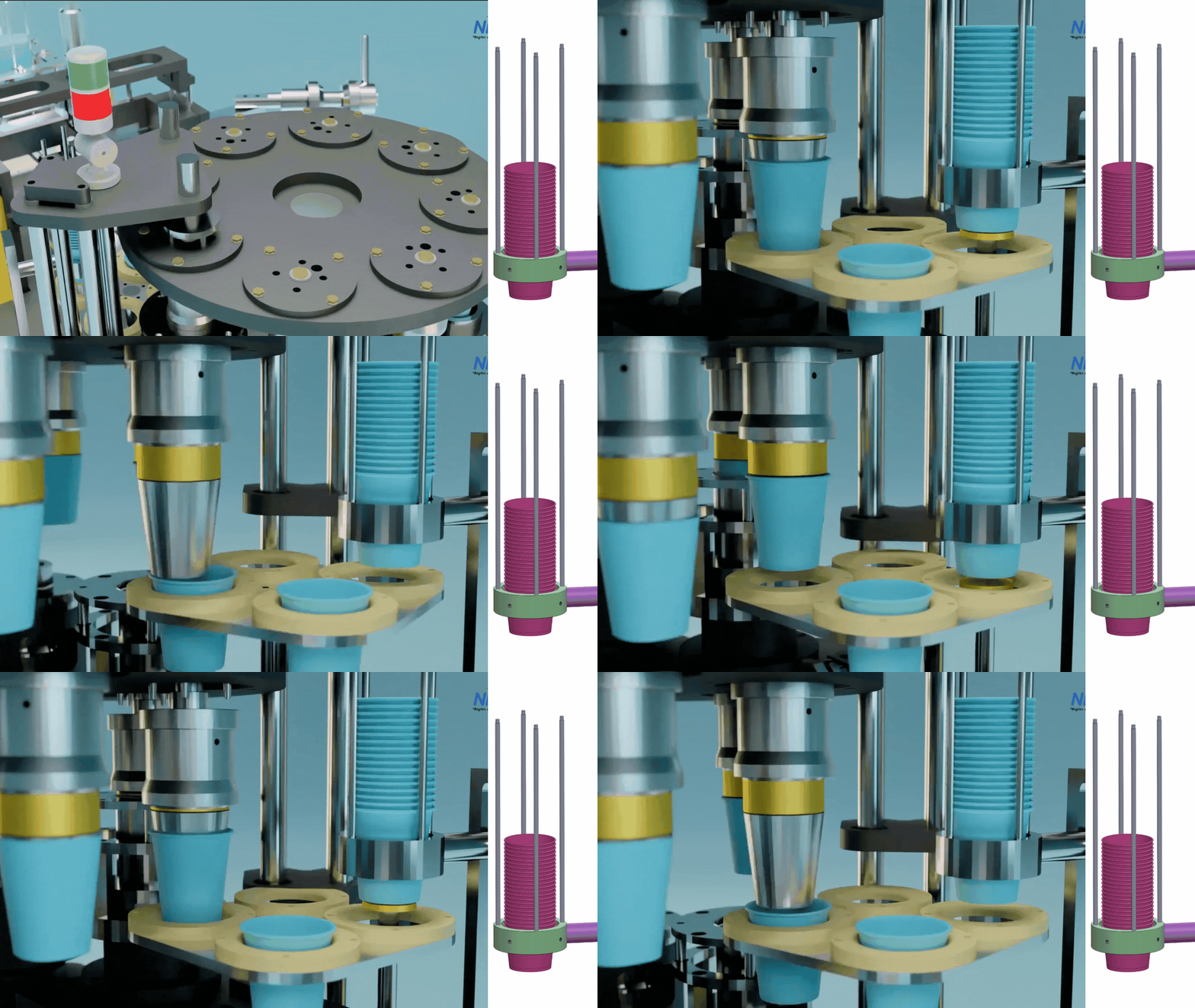
  • Double Curling: Pre-curling and final curling are performed separately for precision.
  • Single Curling: Both pre-curling and final curling are achieved simultaneously using a cam mechanism.
paper cup making process

8. Finished Cup Collection

The cups are transferred to the collection station after completing the curling process.

  • Auto-Collection Unit: Advanced machines stack finished cups in predefined quantities (e.g., stacks of 30 or 50 cups).
  • Packaging Integration: The stacked cups can be directly attached to a packaging machine for dispatch.

Key Features of the Paper Cup Making Process

StageDescription
Raw Material PrepEnsures coated paper meets the specifications for the desired cup type.
Moisture AdditionFacilitates smooth curling and reduces material stress.
Sidewall FormationShapes the cone and seals it for a sturdy base structure.
Bottom SealingJoins the bottom disc to the cone using knurling for leak-proof performance.
Top CurlingStrengthens the cup's rim and enhances usability.
Collection & PackagingAutomates the stacking and packaging process for ready-to-ship products.

Advanced Features in Modern Paper Cup Machines

  • Multi-Heating Options: Machines offer various heating methods, including ultrasonic and hot air, to suit different coatings.
  • Leak-Proof Sealing: Knurling tools ensure perfect welding of the bottom disc and cone.
  • Speed and Efficiency: High-end machines produce 50–100 cups per minute.
  • Customization: Adjustable settings allow for production of cups ranging from 2 oz to 32 oz.

Conclusion

The paper cup making process is a finely tuned operation requiring precision at every stage, from raw material preparation to curling and collection. By leveraging advanced machines with features like ultrasonic sealing and automated stacking, manufacturers can ensure high-quality production with minimal waste.

Investing in the right machine and maintaining its components can streamline operations, reduce downtime, and meet the growing demand for disposable paper cups, especially in today’s sustainability-focused market.

Loading form...